
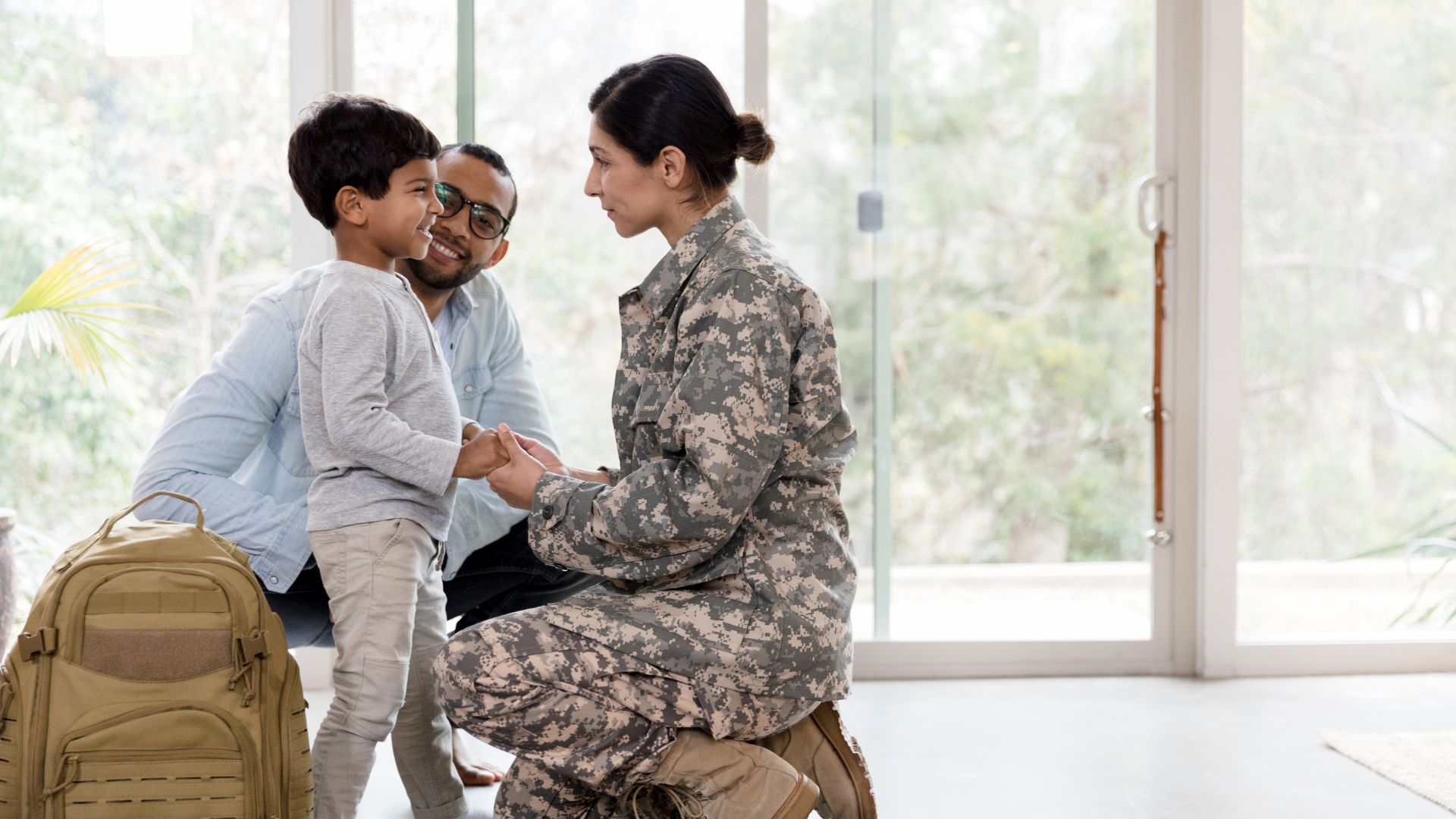
Deployment affects everyone in the household, not just the service member. Emotional preparation helps couples, children, and individuals face separation with more confidence and fewer surprises. This guide offers step-by-step ways to prepare, a timeline from the first notice to departure day, age-based tips for talking with kids, and signs that extra support may help. Blue Heron Counseling provides online counseling for military families across Florida.
Start by making the invisible visible. Feelings you name and plan around are easier to manage than feelings you avoid.
Quick tip: Write the plan down and keep a copy somewhere everyone can find it.
A written plan turns worry into action. It gives everyone a clear picture of how the household will run while the service member is away, and it can be adjusted as things change.
Review the plan together a few weeks into the deployment and update it as needed.
Start as soon as you have reliable information. Earlier preparation gives your family more time to adjust.
Hold the big conversations: finances, roles, communication, and what each person is worried about. Build your support network.
Shift from planning to connecting. Make memories, finish practical tasks, and keep routines steady so the household feels stable.
Keep goodbyes simple and honest. Expect a mix of emotions, and plan something comforting afterward, such as a favorite meal or a walk.
Give the household time to find a new rhythm. Keep routines going, and check in with each other about how everyone is coping.
Begin talking about homecoming expectations. Our guide on deployment reintegration can help with that stage.
Deployment stirs strong emotions, and most of them are a healthy response to a major change.
Common reactions (the softer end):
Signs that more support may help (the harder end):
Counseling can help with all of these. If anyone is in crisis, call 911 or call or text 988. Service members, veterans, and their families can press 1 to reach the Military and Veterans Crisis Line.
Most mistakes come from avoiding hard conversations or trying to be strong alone.
The best method depends on connectivity, schedules, and the person receiving it. Most families use a mix.
Agree on a flexible rhythm and treat missed contact as a logistics issue, not a rejection.
A strong connection before departure makes the separation easier to carry. Use the time you have to build trust and clarity.
Couples counseling can give you a structured space to practice these conversations, including methods drawn from the Gottman Method.
Quick tip: Book a date night in the final two weeks, even a simple one at home.
Honest, simple explanations help children feel secure. Adjust the detail to their age.
Use short, concrete language. Visual tools such as a countdown calendar or a photo near the bed make time easier to understand.
Share clear facts, explain how routines will stay the same, and invite questions. Let them help with a goodbye ritual or a care package.
Be honest and respect their need for independence. Give them a meaningful role without turning them into a substitute adult, and make space for anger or silence.
Simple, honest words help children feel safe. You do not need perfect phrasing, but a few ideas can guide the conversation.
Repeat key messages often, because children may need to hear them several times. Watch for changes in sleep, behavior, or school and ask for help if they last.
Quick tip: Say the words out loud once beforehand so they feel natural when the moment comes.
Build your own support network, protect time for yourself, and plan how you will handle hard days. Keep goals, work, or hobbies moving forward.
Share your own feelings and tell your family what you need from them. Leave reminders of connection, such as notes, recordings, or planned messages.
Birthdays, holidays, and school events can feel especially heavy when someone is away. A little planning keeps these moments meaningful.
Keep expectations flexible, and focus on connection over a perfect celebration.
Quick tip: Ask extended family to help with a milestone call or surprise so the day feels shared.
Caring for yourself is not selfish. The person who stays home often carries extra responsibilities, and steady self-care protects your energy, patience, and mood.
Self-care looks different for everyone, so choose what is realistic for your season of life.
How early should we start preparing for deployment?
As soon as you have reliable information. More lead time means more room for honest conversations.
Is it normal to feel angry before a deployment?
Yes. Anger often covers sadness or fear and is a common reaction to coming separation.
How do I tell my young child that a parent is deploying?
Use simple, concrete words, explain who will care for them, and use a visual countdown.
What should couples talk about before deployment?
Finances, responsibilities, communication plans, expectations for the time apart, and how each person is feeling.
How can I cope with loneliness during deployment?
Keep routines, schedule regular social time, and build your own support network.
Can counseling help before a deployment?
Yes. Counseling offers a space to process feelings, practice communication, and plan for stress.
Can we do counseling online while a service member is away?
Individuals and families can use online counseling from home. Eligibility depends on being located in Florida during sessions.
How do I help a teenager struggling with a parent's deployment?
Offer honest conversation, patience, and space. Ongoing withdrawal or mood changes may be worth discussing with a counselor.
What if we do not hear from our service member for a while?
Silence can be hard but is often tied to operations or connectivity. Lean on your support network and avoid assuming the worst.
When should I get immediate help?
If anyone is in danger or thinking about self-harm, call 911 or call or text 988.
If your family is preparing for deployment, Blue Heron Counseling offers online counseling for individuals, couples, and families across Florida. Emily Reed, a military spouse of more than 10 years, understands the emotional side of deployment. Contact us to begin, or learn more about our services.